No questions please.
I’m finally returning to Olympic National Park during our upcoming road trip. My only visit was back in 2003 and I absolutely loved it. So much so that I hand-coded a dedicated html website to show off our trip photos to friends (the partial site renderings are courtesy of wayback machine, which only sorta archived it). That site would eventually expand to a few national park trips before I eventually moved it all over to scottspics.com, which ran on a php photo gallery.
By 2005, I was primarily posting to Flickr first—which featured a great community of fellow roadtrippers—and uploads to my own sites started to taper down a bit. Eventually, I was nearly exclusively sharing to facebook and twitter. That’s too bad, as the fragmentation meant that I’ve never had a single library of all my trips. I’d eventually like to change that.


I figured I’d test out a new micro.blog crossposting feature with ten shots from our Norway trip earlier this summer.


“We could have never known how much this trip would change our lives."
—from Out There: A National Parks Story (which debuts online on Aug 22)
Oh man, I know how that feels! I felt the same way when I visited 100 National Parks in 100 Days to celebrate the 100th Anniversary of the National Park Service (sorta accidentally).
Here’s more about the film:
In the centennial year of the U.S. National Park Service, a young filmmaker and his childhood friend set off on a 10,000-mile journey through America’s national parks, leaving home with little more than a camera and a desire to understand what draws people to these wild places. What begins as a summer road trip evolves into a stunning journey of discovery, uncovering the stories of those who protect, visit, and find meaning in the parks.
Along the way, they meet rangers, conservationists, and everyday visitors whose lives have been shaped by these places. Through intimate interviews, sweeping cinematography, and a moving original score, Out There weaves their stories into a portrait of the national parks as more than extraordinary landscapes, but as places of healing, reflection, resilience, and connection across generations and cultures.
Both a cinematic tribute and a grassroots love letter to America’s public lands, Out There explores what it means to find belonging in the natural world, and the enduring power of these shared places to bring us closer to the land, to one another, and to ourselves.
Have a personalized license plate?
In some states, if your personalized plate is stolen, you can’t get the same one as a replacement—you’ve lost it forever. So to make mine just a bit harder to steal, I changed out the license plate screws for security screws that require a matching tool to remove.
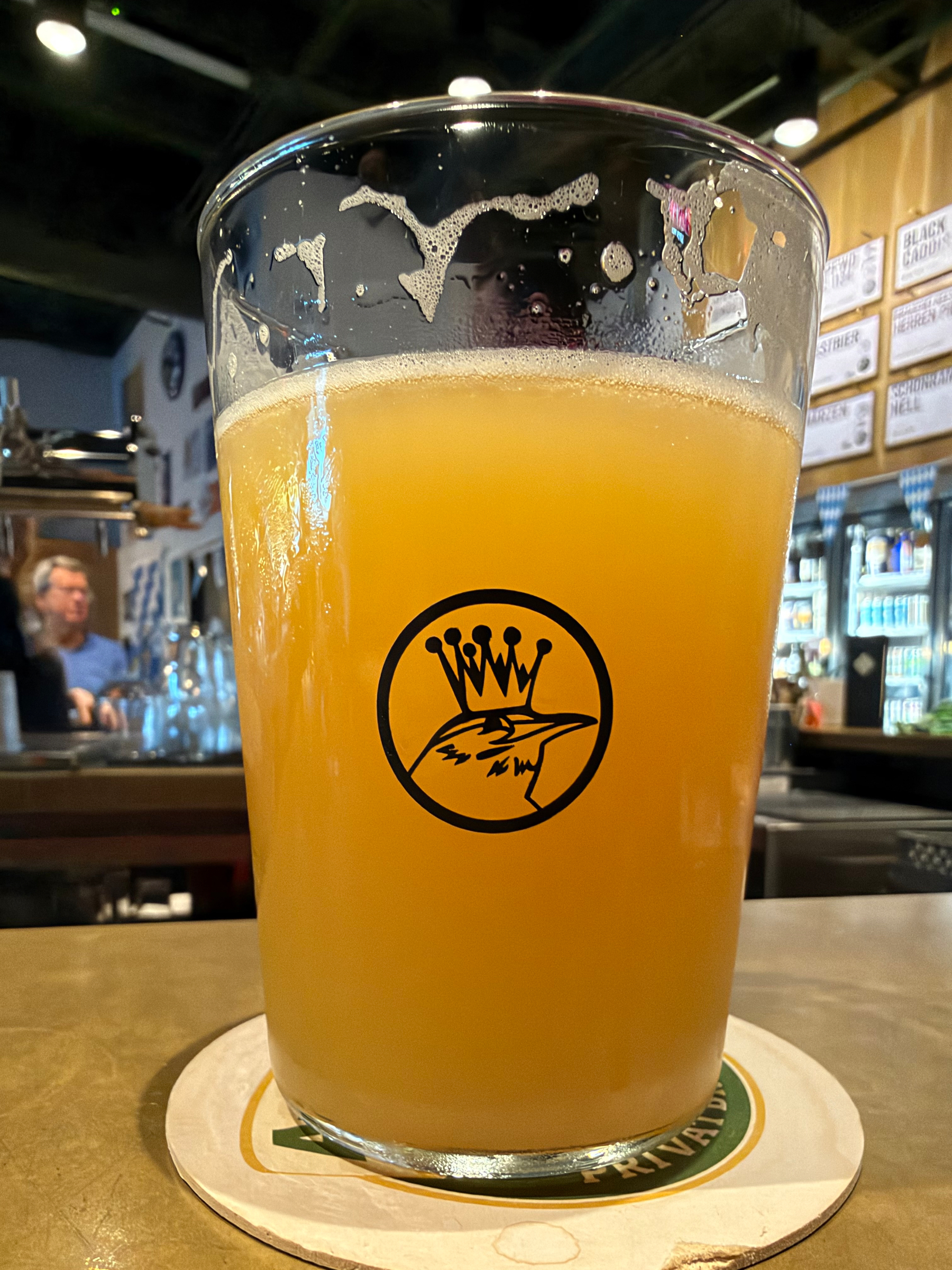
When there’s a broken sprinkler at your local brewery, you build a sailboat.
Roar
Also good to see that the Wavelength ios app (for micro.blog) got an update. I’ve been considering recording some audio posts (distributed as a podcast on rsjon.es) for quite some time. Wavelength might be the app that makes it happen.
Fun to see a new Micro Monday newsletter today! Also fun that photo posts from both Jen and I were included.
And, of course, I’m all in on their post prompt 😉:
🌲 August 25 National Park Service Birthday The National Park Service turns 110 this year.
Show us a favorite national park, state park or trail. We want to know about the places you return to whenever you need to get outside.
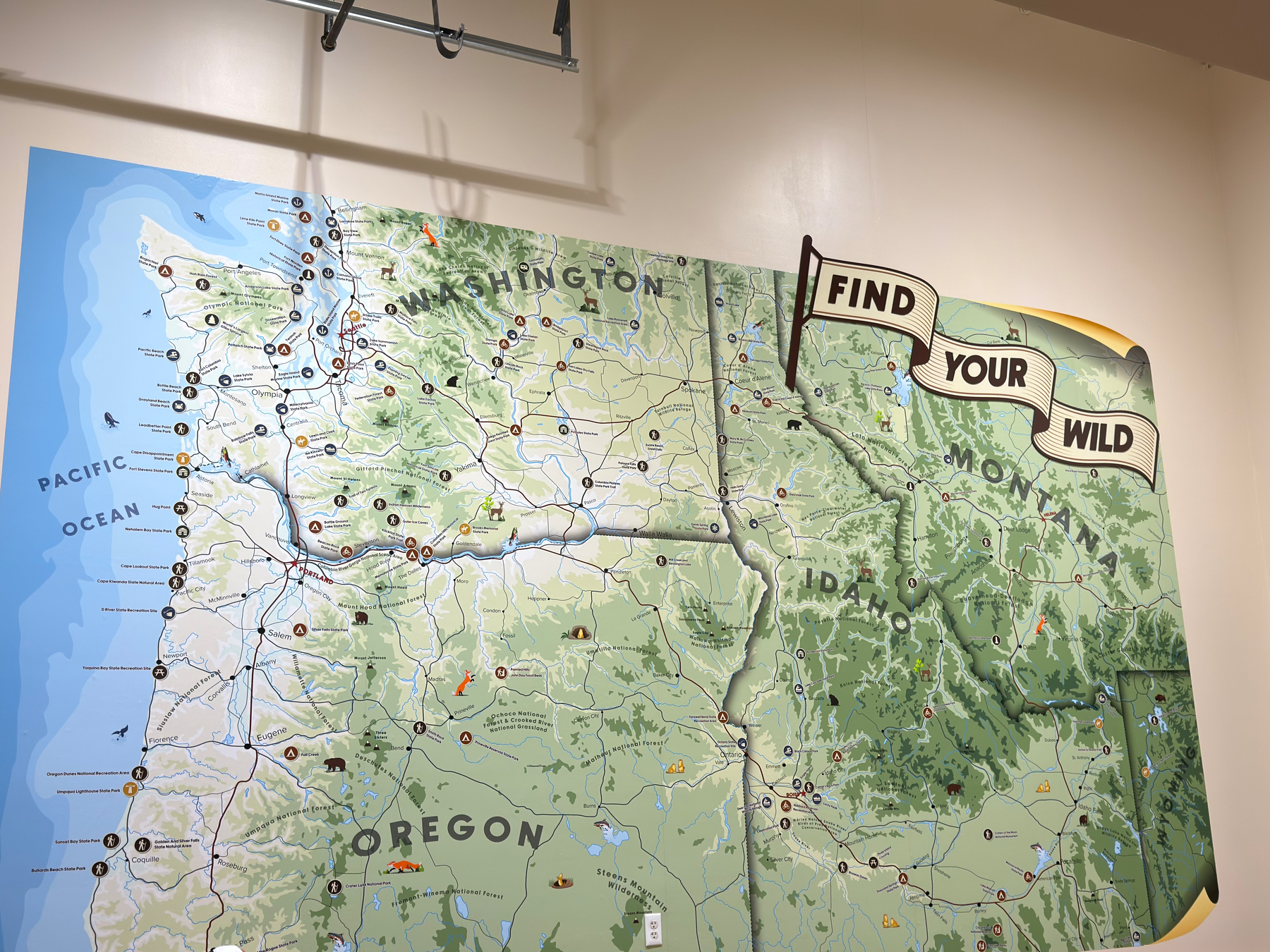
We’ve shifted our upcoming camping trip from Banff/Jasper to the PNW instead. We’ll tackle a number of quest items—including re-completing the Treasured Places quest—and revisit Yosemite, Olympic, Mt Rainier, & Bryce Canyon. Excited for OLYM/MORA, as it’s been 20+ yrs since my last visit! 🙈
Welp, that didn’t take long…
Hello again old friend.


Bummer to hear that EchoFeed is shutting down. I’ve always been happy with Micro.blog’s rss cross posting, but it was a great option for others.
(If you’re seeing this one Bluesky, Mastodon, or Threads, my posts all originate from rsjon.es and are automagically copied to those platforms).
In 2021, I got the chance to meet up with Charles McCool for a beer or two or three (with wife Julie joining a bit later). I didn’t interact with Charles frequently online, but had always felt like we were kindred spirits nonetheless.
I had good reason to feel that way. Our conversation that day lasted much longer than expected and touched deeply into our shared life philosophies. It easily ranked among my most favorite meetups—and that’s a tremendous compliment.
So I was absolutely stunned when I learned of his unexpected passing this spring. Today is his birthday, and I wanted to pay a moment of respect to one helluva cool dude. Thank you Charles for inspiring countless people to travel. I’m raising a pint in your honor today.
I’m usually frustrated when people wander right out into a shot I’m trying to take, but it seemed to work out just fine in this case.
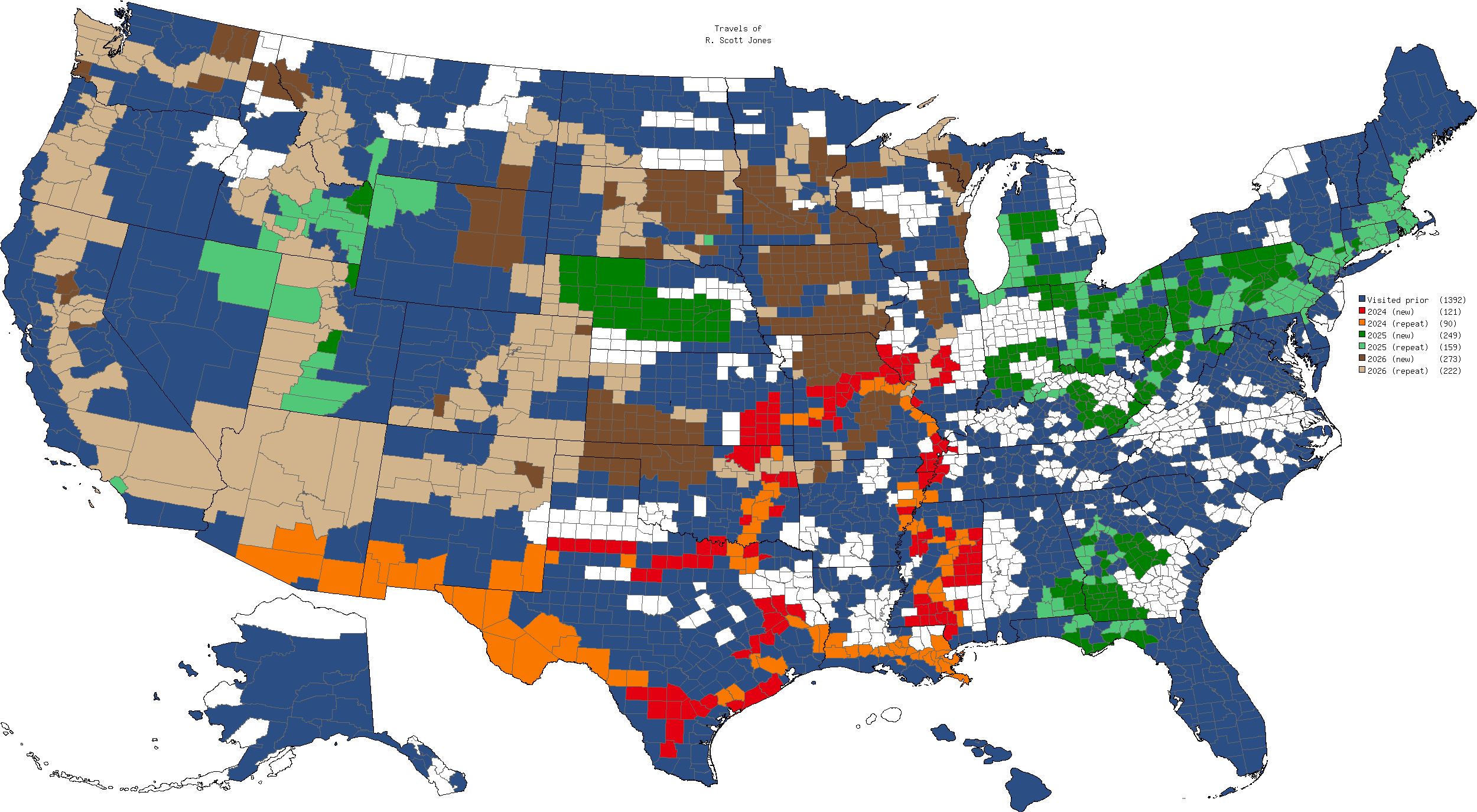
Crazy to see that, since 2024, I’ve been to exactly 1043 US counties, which is a full 33% of the US. Of those, 630 of those have been my first visit to that county, exactly 1/5th of the US. Wow! 🤯🤯🤯
Updated some of my travel quests after our recent trips:
- 50 Countries by Age 50 (now 63/100)
- Drink a Guinness in an Irish Pub in 32 Countries (66%)
- 100 UNESCO World Heritage Sites (61%)
- UNESCO World Heritage Site in 50 Countries (60%)
- National Parks in 50 Countries (38%)
- US Counties (79%)
I was constantly on the lookout for beer cheese soup during our last road trip, finding only a single mediocre bowl at a brewery. So my wife did some digging and found the only spot in Phoenix that seems to be serving it and surprised me with lunch out today.
Today we tracked down the simple gravesite of Scotty Philips, who is often regarded as the guy who saved the bison from extinction.
When only a few hundred bison were left in the US, he made the decision to grow a herd to more than a thousand, which he distributed to ranchers around the country specifically to help rebuild the population.
If you’ve ever seen a bison in the wild, there’s a very good chance that it is a descendent from his herd.
Some additional background from the National Buffalo Foundation:
James “Scotty” Philip (1858–1911) is the Scottish-born American rancher and South Dakota politician remembered as the “man who saved the buffalo” due to his role in helping to preserve the American Bison from extinction.
Philip emigrated to the United States in 1874 at the age of 15, first settling in Victoria, Kansas, but moving shortly thereafter to the Dakota Territory to join the Black Hills gold rush. Unable to make a living from his mining efforts, he took on odd jobs enabling him to buy a few cows to begin ranching. Philip married Sarah Larribee. Since she was half Cheyenne, the Philips were given a plot of treaty-protected Native American land and allowed to graze the small herd on the fertile grasses of the reservation.
His concern for the America bison may have begun prior to his move to the Black Hills. In Kansas he had seen trainloads of bison hides in transport to tanneries and heard that hunting pressure had divided the once incomprehensibly expansive bison population into distinctly separate, dwindling herds. Later, while building his ranching empire, which at its peak comprised more than 40,000 head of cattle and employed 65 hands, he noted the lack of bison from what had traditionally been a bison-covered range. He became convinced he must try to save and preserve a prominent “symbol of the west.”
Philip had heard of Pete Dupree, who had managed to catch five buffalo calves during the last big hunt on the Grand River in 1881. When Dupree died in1899, Philip purchased the herd from the Dupree estate. Then he built the first-ever enclosed bison pasture along the Missouri River just north of the present day town of Fort Pierre. When it was completed in 1901, Philip and several of his ranch hands drove the Dupree herd, now grown to 74 head, 100 miles to the pasture.
In 1906, Philip appealed to the US Congress to help save the buffalo. Philip was permitted to lease 3,500 acres of unclaimed Government land to form what may be South Dakota’s first tourist attraction, the Buffalo Park.
Philip also worked with ranchers from Canada, North Dakota, Montana, Oklahoma and Texas as bison rescuers. Their collective effort acquiring small numbers of bison at a time is largely responsible for the preservation of the species.
Due to his hard work and determination, Philip had experienced relatively quick success as a rancher and in several entrepreneurial ventures. And he had formed numerous relationships of influence and power. He was a respected military scout and courier, an advisor and friend to four governors and several bank directors. He was co-founder and CEO of the first Missouri River Stockman’s Association. He was a personal friend of several Indian chiefs, including Crazy Horse and Red Cloud. He was a senator in the South Dakota State Legislature. He used this influence to become not only the benefactor of the American bison but also to gain fairer treatment of Native American peoples and to help his employees, neighbors and friends advance themselves.
Philip died suddenly on July 23, 1911. He was buried on a family cemetery near his buffalo pasture. The herd had grown to approximately a thousand head, the largest in the world at that time. Some of the bison came down from the hills as the funeral procession passed. Newspapers suggested the bison were “showing their respect to the man who had saved them.” Members of this herd were used later to stock national and state parks throughout the United States. Custer State Park, for instance, purchased 36 head from the Philip herd.


Wowza!