
Intentional Life
The last years of your life suck
Unless you die earlier than you need to, the last years of your life generally suck.
When planning out the course of our lives, many of us see retirement as our “golden years.” Not just the slow wind-down of our lifespan, but the culmination of a long-time goal: the end of the “ugh I have to go to work again today” phase of our lives. It means the freedom to do, well, whatever we want.
It’s something we aspire to, and often make sacrifices to attain. We work harder—postponing important personal goals—during our “working years” to help ensure that we have a better retirement. We don’t take that bucket list trip, or we spend the extra weekends pounding out work deliverables in order to “get ahead.” We defer experiences we want to have. We don't save time or energy for the things we say we really care about.
In short, we try to play the marshmallow game to win both marshmallows.
But what if the last several years of your life won’t be fun, no matter what you have planned for it? Odds are good that it’s going to suck—at least in comparison to your life right now. Put another way, what if the second marshmallow is disgustingly stale? Or maybe more to the point, what if you wait too long and both marshmallows are stale?
What to expect when you’re old
There’s a roughly 50% chance that your partner will die before you. You’ll spend an increasingly large portion of your life in doctors appointments, and awaiting test results, and being seen by various specialists worried about various ailments. You may have significant long-term health issues that detract from your quality of life. Many of your friends will die, or move away to be closer to family or medical services. Small injuries may have big consequences, disrupting or potentially ending your ability to enjoy the hobbies you love. Various body parts won’t work as they used to. You’ll slowly (or sometimes quite quickly) lose important parts of your independence. You’ll get more forgetful, and probably feel bad about it. Your hearing, eyesight, finger dexterity, strength, and mobility will all decrease. You may need daily assistance to complete many of the relatively routine daily tasks of living.
In short, at some point, your life will very likely not be as you’d like it to be.
A new perspective
Now, that doesn’t mean that life will be horrible. You’ll probably have a much better perspective on what really matters in life. You may be very grateful for the opportunity to live yet another day, even if it doesn't look like you might have expected it to a decade before. You’ll adapt, as best you can.
But you won’t be living the same life you did before.
It’s important to plan ahead for this period of your life. Trust me—if you don’t, you may not have much input into the decisions that must be made. It’s also a tremendous burden to push onto your partner, or children, or siblings, or whomever will have to do it for you.
How to plan for your last years
When I do this mental exercise, the first thing that stands out is that it’s a period for which I shouldn’t optimize for doing fun things. Simply put, I know those last few years of my life won’t be fun. They’ll be challenging. I’ll have increasingly little control over my daily life. I won’t need money for travel, as I likely won’t be doing any. In fact, there’s not much “extra” money can do for you.
That doesn’t mean I should spend it all and leave no resources available for those last years. Not at all. Make your last years as good as you can; just don’t count on those years being nearly as good as the previous ones were. Once you cover your basic living costs, you won’t need much more—there’s no additional utility in having a nicer house, or a nicer car, or even a nicer TV.
You’ll want enough resources for good care, and a comfortable place to live, and some basic spending money. But there’s just no marginal benefit in having expensive versions of any of those things. They don’t move the happiness needle at all by that point (and they probably never did to begin with).
What this means to me
So when I think about the last stage of my life—the one that will likely suck—I want to have accomplished everything I wanted before that time arrives.
That means not deferring the experiences I want to have now for the possibly mythical retirement years I am looking forward to. Because not all of those years will be grand. Some—hopefully. But not all of them.
So do more now.
Do it when you can really enjoy it.
And paired with the compounding nature of memories, this will provide you with far greater personal value over the course of your life than waiting until late in life to have the experience.
Better yet, when you do finally reach that stage of older age when you encounter more of the suck, you’ll feel good to know that you predicted this—you did the important stuff early. You front-loaded valuable experiences. You accomplished what you wanted to. You had your grand experiences already, when you could most enjoy them.
I suspect that will make the transition to those sucky years just a bit easier.
This was originally posted on Hey World.
Best reasons to #OptOutside on public lands this Black Friday
This is a short draft written for #NatureWritingChallenge, a weekly exercise to spend an hour writing about a specific topic about the outdoors, then participating in a twitter chat with the other participants.
This week’s topic is the title of this post; though as it turned out, this post is less about #optoutside on Black Friday specifically and maybe more about choosing a life that opts outside regularly. Either way, I think you’ll get my point.
I’ve intentionally abandoned the frantic crowds of Black Friday since 1999, when I first ran across Adbusters.org’s Buy Nothing Day campaign back in college. I’ve since skipped all the crazy sales on all on the crap I really don’t need, choosing instead to either travel during Thanksgiving weekend, spend the day outside recreating, or attending the biennial Territorial Cup game when it’s played at Sun Devil Stadium.
For me, #optoutside wasn’t a new idea—it was just REI finally promoting what a bunch of us had already been doing. If you haven’t been opting outside on Black Fridays, here’s a short list of why you should change that this year.
1. They’re YOUR public lands
No need to buy a damn thing—you already own them!
And they’re among the most amazing places in the world. Spend as much time as you can enjoying them.
2. Memorable experiences > crap you bought on sale
You probably don’t need that thing, anyway. And your family would probably enjoy something a bit more personal as a gift, too, don’t you think? When you’re old and gray, the last thing you’ll remember or care about is that cheap TV you bought on Black Friday. Instead, you’ll remember the things you did and the experiences you had. That day you brought your niece to that cool waterfall and she played in the pool at its base. Or the great sunset you enjoyed during that scenic drive with your girlfriend.
Products become obsolete and worthless, but a funny thing happens with memories—as time passes, your brain remembers them as being even better than they seemed at the time. Memories gain value over time, so they’re a much better investment.
3. Hyper-consumerism blows
When you focus too intensely on what you own, you forget what’s actually important in life. When your self-worth is derived from what you’ve bought, you rob yourself of the uniqueness that makes you you.
Worse is that you’ll never gain any lasting satisfaction by buying stuff. You might get a temporary bump in satisfaction, but there will always be something “better” that comes out that you’ll need to buy to feel the same level of personal worthiness. That’s an awful treadmill to climb onto.
4. The outdoors is good for you
You probably already know this. Yes, you get some exercise. Yes, it’s far better than sitting on the couch or endlessly scrolling through facebook. And yes, it’ll also help you relax and reduce stress.
But beyond those things, it’s also great for deepening relationships. For being present in the moment. Or for new experiences. For contemplation. Or finding common ground. For sharing new places with people you love. Or making new friends.
Basically, for all the things your soul craves.
5. Minimalism & intentionality are sexy
The four most important things you own are your time, your attention, your attitude, and your health. Those four things are the currency of life.
All the stuff you own requires you to spend that currency—you spend your time to make money to buy the stuff, then do the same again to pay to store it somewhere, and then it requires more of your time and attention to manage and use it. We don’t think about it very often, but the cost for our stuff can be a lot higher than you’d expect.
I’m not saying you shouldn’t buy anything, ever—I’m just saying that you should carefully and deliberately consider what things you decide to own. Maybe you don’t need a need new 4k TV because you’d rather save that money to travel, or maybe you don’t need to spend as much of your limited time consuming content from it.
The point here isn’t to shame you into a life of owning nothing or to be overly preachy. It’s just to have the conversation with yourself about what you really want and what things should earn your attention. Being intentional and deliberate with your life helps ensure that you’re living the life you actually want, as opposed to the one that so many people seem to just default their way into.
Being present and intentional in life? Well, that’s sexy af.
Not convinced?
Well then, fuck it—just #optoutside for the ‘Gram instead.
I gave up the NFL to make more time for adventuring
Football season is once again upon us, but I won't be donning my favorite jersey on Sunday mornings this season, yet again.
Don't get me wrong. I grew up a San Francisco 49ers fan. Well, make that a rather passionate Niners fan.
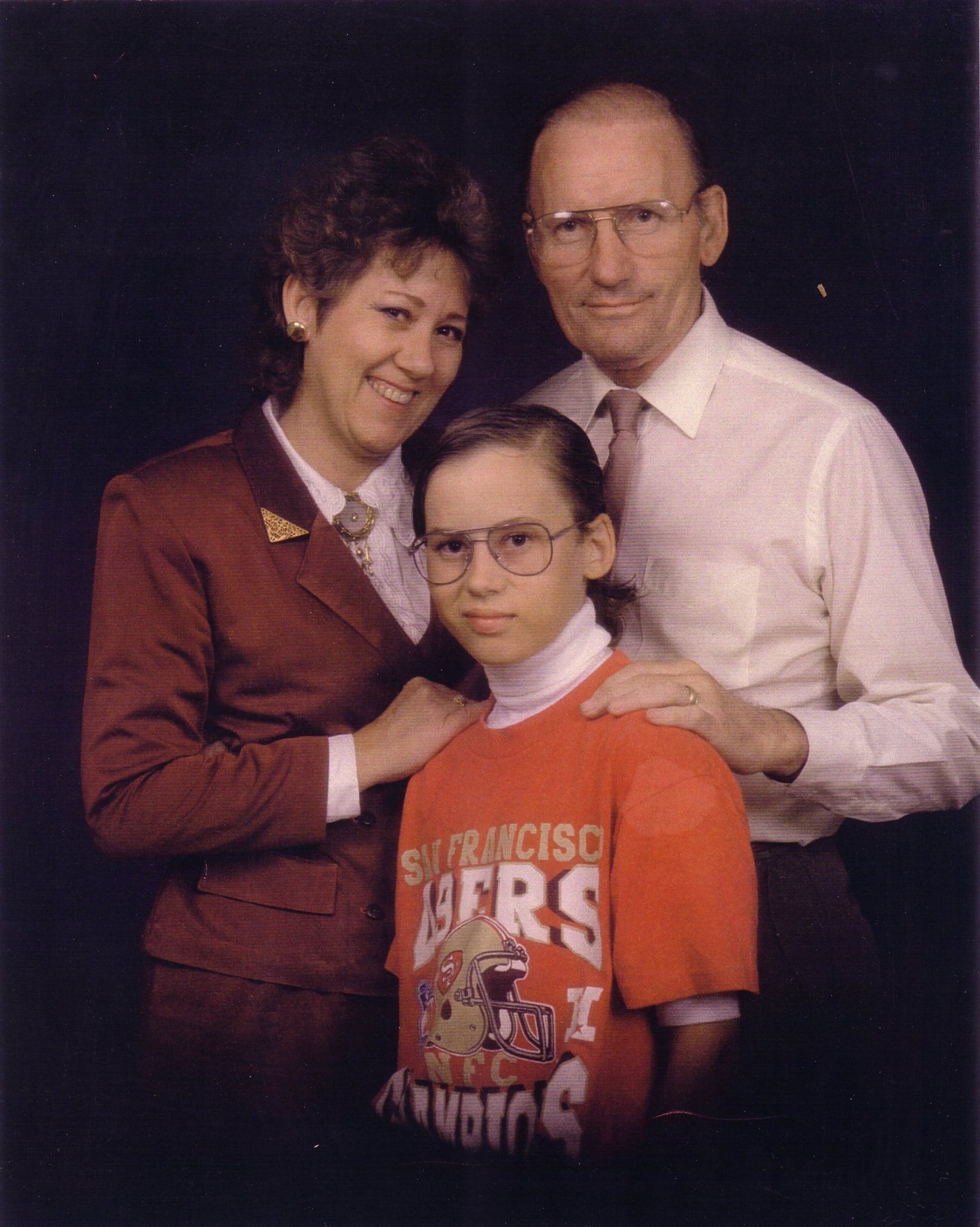
How passionate you ask? Well, passionate enough to persuade force my parents to let me wear a Niners shirt during one of our few formal family portraits. Yes, that's an actual family photo from my childhood.
I remained a dedicated fan through my youth and into adulthood. I'd rejoice in the playoff runs and endure losing seasons. But my loyalty to the game—and especially my team—never waned. One of the true constants in my life has been spending my fall Sundays watching NFL football. I'd record and later rewatch Niner games so I could better understand how plays and the game unfolded. I attended game watching parties with the local 49ers fan club. I made a pilgrimage to Canton to worship the busts of 49er greats, and I could batter rival teams with an unusually comprehensive bevy of cutting insults. I owned far too many products sporting the team logo.
And then three years ago, I gave it all up—cold turkey.
In short, I gave up the NFL to make more time for travel and adventuring.
I boxed up all the shirts, hats, jerseys, cups, plates, and other memorabilia I owned and unfollowed countless NFL and 49ers social media accounts. That might seem a bit dramatic to some, but sometimes the best breakup is a clean break.
Don't get me wrong, I still love football. And my fall travel opportunities remain substantially limited by the football schedule—I'm an even bigger Sun Devil football fan, after all. But it all came down to choices. And while I loved watching pro football on Sundays (and Mondays, and even Thursdays), it wasn't worth devoting so much of my fall to the sport. Because it's not just watching a game or two or three every week, but also keeping up with the latest news, the latest conjecture, the nonstop discussion and analysis. You know, casually turning on the NFL Network and suddenly wondering what happened to the last two hours. There are surprisingly large phantom time costs involved. Until I opted out, I didn't realize that being a diehard pro football fan takes up a lot of one's free time.
Choosing priorities
Obviously, I'm not arguing that you should join me in ditching the NFL. It's simply a gentle reminder to be intentional with your time and attention.
Life is full of tradeoffs and opportunity costs. You can't have everything, so you have to prioritize based on what's most important to you. Maybe the NFL makes the cut in your own life. For me, making space for more adventures—even if that's just squeezing in a hike or day trip each Sunday—was more important than participating in America's most popular fandom. And yes, even if it was something that I truly did love.

Don't get me wrong—I do occasionally miss it, at least a bit. But overall I'm pretty happy with my decision...surprisingly so, in fact. I had expected it to be more difficult than it really was. I had forgotten that it can be a bit of a relief to step away from something; doing so often provides an odd yet empowering sense of newfound freedom. And when I can direct that new freedom towards something I love doing even more? Well, that's worth making the change.
As I dropped the NFL, I also made a conscious effort to curtail my investment in college football. I don't read up on other teams much anymore, nor watch random games on television, even when it's a much-hyped matchup of top 5 teams. In fact, it's rare that I watch a game that doesn't involve my Sun Devils. Ok...I admit that I still occasionally gleefully watch that awful team down south lose again, just for funsies.
Making some choices
If you want to travel more, or go on more adventures, then you may need to make some adjustments to your life to make that possible—whether that's freeing up time, saving money, or both. Often, that will involve some choices—potentially hard choices—about where you place your focus.
I'm often asked how I manage to travel as much as I do. Some of it stems from some pretty big decisions I've made in my life, such as choosing not to have kids, or not pursuing more financial stability by working 70 hours a week in order to climb the corporate career ladder. And it's also because of how I travel—traveling fast and camping in order to avoid the expense of hotels—even when I have to fly to my destination. But it's not just those things alone. It's also the priority I generally give travel in my life.
It means skipping happy hour after work on Tuesday so that I can do laundry and prep for a weekend trip, so I can leave immediately after work on Friday. Or choosing a cheap sub over a nicer restaurant so I can save some gas money for next weekend's road trip. Or typing this on a 6 year-old MacBook Pro, even though my battery is toast and I've been dying to upgrade. It means driving my car into the ground before replacing it with something better.
But it's not just about saving money. After all, my divorce with the NFL centered on saving time, not cash.

Being time poor but great at bar trivia
I'm not well versed on pop culture. That's rather clear to anyone who knows me today. I haven't seen the latest movies, I only watch a handful of tv shows, and I don't spend any time following celebrities. Most modern pop culture references zip over my head. I'm simply not someone you want on your bar trivia team. I bet most of the people who've met me in the last decade or so would assume that's just "who I am."
The truth is, that wasn't always me. I used to go to the movies at least once a week, and I had enough shows I watched regularly that it was a constant struggle to keep a sliver of space available on the DVR. And I sought out all the football I could find, at least when I wasn't playing it on xbox instead.
It was actually a period of minimalism—an attempt to reduce the number of material possessions I owned—that helped spark the change. I was already thinking critically about what items I owned, and why I owned them, so it was natural to turn the same analysis towards how I spent my time. And it's astounding how much of a time sink all of this pop culture consumption can become.
The opportunity cost of time wasters
When I sat down and looked at how I was spending my time, something jumped out at me. It was all the things I didn't seem to have time for anymore. I wasn't reading any of the books I had bought. I hadn't written a blog post in ages. I wasn't hiking as often as I'd like—and when I was, I was simply returning to the same familiar trails instead of seeking out new ones. I had countless projects I wanted to work on, but I never seemed to have time to get started on any of them.
I was spending, at minimum, a dozen hours a week watching tv or movies that I didn't care too much about—shows I probably wouldn't miss if I just stopped investing in them. It's remarkably easy to keep watching a show after you're a season or two in, even if it's no longer especially entertaining. The sunk cost fallacy and simple inertia are more powerful than we realize. And as a result, I was stuck just passively consuming entertainment instead of creating my own.

So, let me pose a question. What could you accomplish with an extra 12 hours a week?
Could you spend some of that on a side hustle that could fund that big trip to Alaska you've been fantasizing about? Could you plan out some weekend adventures that you might not otherwise had gotten around to taking? Could you spend it learning how to be a better photographer, or maybe a better photo editor? Could you spend it prepping your gear so your next trip was easier to prepare for? Could you spend a day finally completing that day hike that's been on your list for a decade?
Would any of these things inspire you to cut out a few hours of senseless sitcom watching each week? Because it sure did for me.
A constant reassessment
There are simply endless ways to waste time—and that was true long before social media cratered our collective productivity. But the key is to be proactive in deciding what's most important to you and what's worth the time you give it. And let's be clear: I'm not perfect at this, by any means. I'm surely due for a reassessment of how much time I spend on twitter, for instance.
An important thing to keep in mind is that your own priorities will likely change over time. This endeavor is something that requires periodic re-evaluations. And to be truly valuable (and I'm convinced it is), this requires candidly honest assessments, not simple rationalizations.
The point is to be open-eyed and intentional about how your time gets spent. If you want to just get out more, then you may have to make some trade-offs to accomplish that. You may need to reduce some of your existing time commitments, even if that means renegotiating your relationship with something you otherwise enjoy—maybe even something like the NFL.
Have you cut out something from your life to make more time for travel and adventure? Tell me about it!
I am going to die on December 27, 2060
It's going to be a Monday, about six weeks after I celebrate my 82nd birthday. And it's the day I'm planning to die on.
Why did I choose that date? Well, not for any big, significant reason, really. Basic life expectancy calculations place my death somewhere between ages 84 and 87. So I figured that, since most lives are marked by a downhill spiral in the last few years before death, I should choose an age a few years before that instead. I ended up picking the round number of 30,000 days of life, which lands on December 27, 2060. So that's my Death Date.
Why I chose a Death Date
It seems a bit morbid to select the date you're going to die, right? Perhaps.
I don't expect to actually die on that day, of course. But if you want to achieve a goal, you need a deadline—even if it’s an artificial one.
My Death Date is my artificial deadline.
Counting down from that date makes the inevitable prospect of death a bit more tangible. It's easy to think about death as this amorphous thing that only happens in the distant future. But seeing it approach in raw numbers helps ensure proper perspective. And knowing that date will be here sooner than I’d like provides motivation and focus to achieve what I want to before I die.
