One of the things I hate most about being sick is that not only do you have to cancel all the fun stuff you might have had planned (as I’ve had to this week), but I’m also completely useless to get anything productive done.

I have just zero motivation, level of focus, basic competence, or desire to get anything done. Nada. Zilch. So it feels like doubly-wasted time. Here I am not doing the things I want to be doing, and can’t even get some stuff done that will make future-me happy. Bleh.

Brendan reposts this every year, and every year I reread it. Make 2024 The Year Of Maximum Enthusiasm - today’s contribution for #Junited

I ran across Keenan’s 2021 post Hey, so, I think I fucking hate the internet, which is about how I felt about twitter at the time, too. Here’s an entertaining song that describes what living your life in a feed feels like.

The last six weeks or so have been a crazy blur, and I just realized that I didn’t get a chance to post much from our 6800-mile road trip.

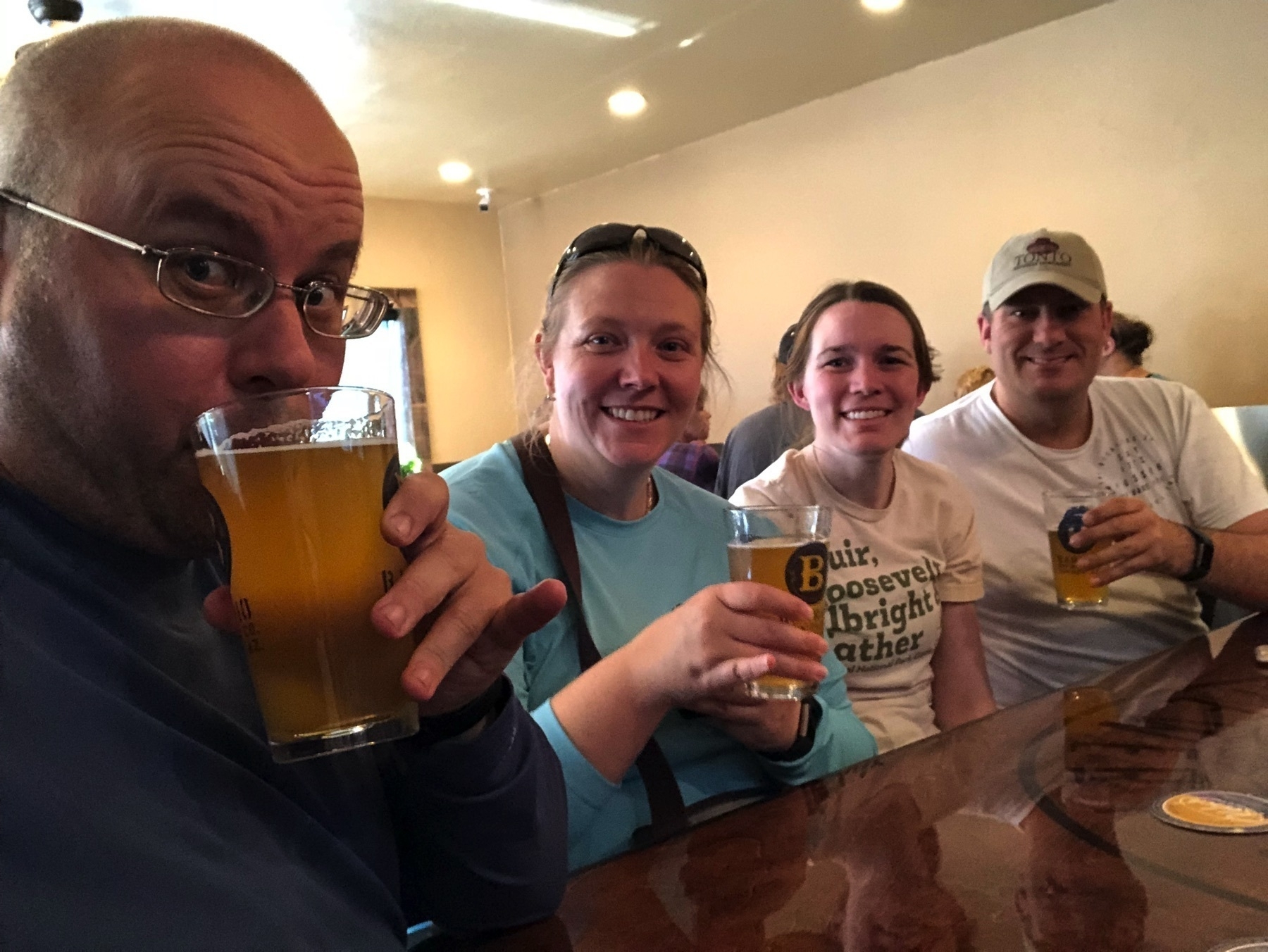
Anyway, one of the highlights was hanging out with our buddy Doc at several days of the French Quarter Fest in New Orleans.

Here are a bunch of ways to get old school Google search results—you know, just the ten blue links.

The Largest City Parks in the United States

Below is a list of the 15 largest city parks and preserves in the United States.

Four out of five

When most people think of Phoenix, they think of endless suburban sprawl. And, certainly, that's part of the story. But here's something that many are surprised to learn:

Four of the five largest city parks are located in metro Phoenix.

As in, municipal parks that are located entirely within city boundaries and are managed by city parks department staff1.

But that's not all...

The Phoenix metro area is also encircled by the nation's largest county park system2, which includes 12 regional county parks comprising about 120,000 acres. The 315-mile Maricopa Trail (and its sister 120-mile Sun Circle Trail) also encircles the metro area by connecting many of these county parks.

And of course, metro Phoenix also borders the famed Tonto National Forest (the ninth largest in the country at over 2.9 million acres), the nearly 500,000-acre Sonoran Desert National Monument, and several million acres of BLM public lands.

You may only think sprawl when you think of Phoenix, but you should probably also think parks, public lands, and preserves, too.

Park Name Acres City, ST Est3
McDowell Sonoran Preserve 30,580 Scottsdale, AZ 1994
South Mountain Park/Preserve 16,281.8 Phoenix, AZ 1924
Phoenix Sonoran Preserve 9,612.4 Phoenix, AZ 1998
Cullen Park4 9,269.8 Houston, TX 1984
Skyline Regional Park 8,700 Buckeye, AZ 2016
George Bush Park 7,800 Houston, TX 19455
North Mountain/Shaw Butte Preserve 7,500 Phoenix, AZ 1972
Mission Trails Regional Park6 7,220 San Diego, CA 1974
Jefferson Memorial Forest 6,218 Louisville, KY 1945
Forest Park 5,157 Portland, OR 1948
Piestewa Peak/Dreamy Draw Preserve 4,857 Phoenix, AZ 19557
Lake Houston Wilderness Park 4,786.6 Houston, TX 2006
Eagle Creek Park 4,766 Indianapolis, IN 1972
Far North Bicentennial Park 4,500 Anchorage, AK 1976
Griffith Park 4,282 Los Angeles, CA 1896
The 15 largest municipal parks, as far as I could tell8. Please send me updates or corrections (please include a meaningful citation).

Sprawling cities = sprawling parks and preserves?

As you can see, the Phoenix and Houston areas absolutely dominate the listings.

That's interesting, as those two cities (along with Los Angeles) are probably the poster children for "urban sprawl" in the US. But the ability to expand outward also provides an interesting opportunity to protect undeveloped land in a way that more dense and established cities like New York, Boston, or even Chicago, would struggle to do.

At the same time, Phoenix was a bit of an outlier. It purchased South Mountain Park from the federal government way back in 1924, just a dozen years after statehood and while the city was still quite small—about 5.1 square miles with a population of 38,500, though growing as fast as ever. Even with the property still 7.5 miles away from city limits, city leaders feared that this was their only opportunity to preserve the best nearby recreational areas. They ended up purchasing an area about 5 times larger than the city itself.

Houston's largest parks, on the other hand, are derived from lands enclosed by federal reservoirs, presumably for flood control and drainage, as the city is located in bayou country. I don't know the specific history at play, but surmise that its large parks were created because the reservoir land would otherwise be "unused" for commercial purposes; whereas in Phoenix's case, it was a very concerted effort to proactively protect prime locations from development.

Note: while I've done my best to be accurate in this post (I've even contacted several cities above for accurate numbers, though I never seem to get a reply), it's surprisingly difficult to find simple, accurate answers. Part of that is because land acquisitions continue (yay!), and older information isn't always updated. But my main purpose in this post is pointing out how many large parks and preserves metro Phoenix has, so even if a few numbers have changed, you still get the picture. If you find an error, please send it to me so I can update this!

Last updated: May 23, 2024


Why you should have a website

There are many, many reasons why you should have you own website.

Here are just a few of them:

  1. Unlike social media platforms that come and go, a website can be your permanent home on the internet
  2. Your friends will always have a way to contact you
  3. You can list all your social media accounts on one page so people can follow you where you're currently active
  4. Writing about what you like is the best way to make new friends online
  5. Everyone can see your stuff, whether or not they have an account on a specific platform
  6. You own your website, so it can't be taken away from you against your will (unlike losing a social media account)
  7. You can import and repost everything that's important to you
  8. It becomes an incredible repository of your life
  9. You can simply direct someone to a post that answers the question you're so so so very tired of answering
  10. It's a great way to highlight your professional proficiencies in a way that can help you get new jobs
  11. No matter how shitty a social media site gets, you'll always have a place to post
  12. You don't have to fit inside artificial character counts
  13. You can display your photos in the format and aspect ratio you want, not however the app-of-the-moment wants
  14. You can post whatever you want and not worry about being moderated for some reason
  15. There's no algorithm you have to somehow please
  16. It's a home for your hobbies
  17. Creating is better than consuming
  18. You can collect email addresses and send emails directly to your subscribers
  19. You're allowed to link to whatever sites you want to
  20. Unlike the firehose of social media, what you write isn't immediately lost into the ether—you can display any post(s) as prominently as you'd like, no matter how old they are
  21. You can design your site however you'd like without regard to any platform's limitations
  22. It's a creative outlet for things you're passionate about
  23. Writing is a great way to think more deeply about a topic
  24. Curate interesting links you want to keep
  25. Write a scathing and detailed review of that company that totally screwed you over
  26. Celebrate your accomplishments! Let the world see what you have done
  27. You can make your own custom linktree
  28. Escape the shallow swiping dating platforms with a webpage of who you are and what you're looking for in a partner
  29. Earn some goodwill by offering the solution to an obscure problem that took you forever to figure out
  30. It's the central hub of your online identity, however multi-faceted you want it to be
  31. Have your own branded email address—using whatever usernames you want!
  32. Promote your website every time you use your email address
  33. You can create a lasting "body of work" that just can't happen on social media
  34. Document your travel adventures in a more coherent and lasting way
  35. Getting random emails from people who your blog has helped is pretty rad
  36. If you have things you want to sell, you can easily integrate that into your own website
  37. You can profit off of your own website, not create value for some external company
  38. You can design your site to look entirely unique and reflective of your own personality, unlike social media platforms
  39. When you post on a website, you can link to that same post, forever, on whatever social media platforms come and go
  40. You can design your site to outlive you (if you want), especially if you add your posts to the Internet Archive
  41. With subdomains, you can have an infinite number of website URLs with just one domain name
  42. It's way easier to look back at your blog posts than it is to look back over your social media posts
  43. It's fun, surprisingly fun actually, to get visitors from across the world
  44. It guarantees a high degree of online independence
  45. It's way easier and cheaper than you think, but offers incredible ROI value
  46. There's no algorithm to "punish" you for not posting on a regular schedule or following trends or any of the other hoops you have to jump through so your friends can see your posts
  47. You can send people to your website, not some billionaire's company website

Ok, that's enough for now. Go get yourself a website! Register a domain (not sure what name to use? start with your name). Connect a simple blogging platform.

Just get started. Thank me later.

The easiest ways to start your own personal website

Back in the early days of blogging, launching your own website required quite a bit of knowledge and a quite long list of steps to complete. If you didn't know what to do, it felt a bit intimidating. I know, I learned how to do it—mostly through trial and (lots of) error.

Part of that angst was not just in setting up the server correctly, but also in not knowing exactly how to style your webpages to make them look the way you want them to. It required research, learning, tinkering, and troubleshooting. Not an impossible task, but definitely a task.

That's one of the reasons that social media platforms took off. The early platforms made it easy to just...post, and got lucky by doing so right at the crucial moment that smartphones became a thing (this was before they started enshittifying everyone's experience, of course).

These days, however, there are a whole bunch of super-simple platforms that make it as just as easy to start a blog as signing up for a new social media account. But with all the countless advantages owning your own website provides.

Simple blog sites

If you're used to social media and you want something dead simple to use, these are the best platforms to start with. They offer a very simple editing experience—just the basics—that allows you to focus on writing, and not get hung up on how the page will look. You can usually add some static pages, categories or tags, and they offer an rss feed too. All the basics you need for a solid website! There are probably other similar options, but these are the ones I know about and have investigated a bit.

Take a quick look at each, but don't worry too much about your choice. You can't go wrong with any of these options. Just choose one, register your own domain, and get started.

Pika

Pika is my top choice for a simple, easy-to-use blogging service. You can use it right out the box without any additional fuss, but it also offers a number of additional customization options. The company behind it is really fun. Pika also offers a really interesting guestbook feature, which includes the ability to leave drawings!

Scribbles

Super easy to use, you get three sites for $5/mo or $50/year. Not much customization, so you won't spend time tweaking instead of just writing.

Blot

For $5/mo, Blot turns a folder into a website. Files in the folder be­come posts and pages on your website. This all works a bit differently than the other platforms, but is a great solution for many.

Bear

Free, barebones (bearbones? just the bear necessities?) blogging platform that lets you post without worrying about design, though a number of themes have popped up and you can customize quite a bit. You can even connect your own domain name, which is astoundingly cool for a free tier. The best part of Bear is the community and the trending posts directory, which is powered by an "upvote" on each blog post. Their fun logo is some weird text: ʕ•ᴥ•ʔ

Write.as

Another great option if you're interested in a simple design that focuses on your words more than design. With a paid account for $6/mo, you also get newsletter and photo hosting functionality too.

Super interesting options

Micro.Blog

Micro.Blog is a combination of social media and a blog and is unlike anything else you've used. You can cross-post to a bunch of platforms, including mastodon, bluesky, medium, flickr and more. It's also its own social community and offers a bunch of other interesting features and dedicated apps. And if you subscribe to the "Pro" version for $10/mo, you can also host your own podcast and newsletter. I'm a member.

omg.lol

Ok look, this site is hard to describe. It's exactly what was fun about the early web. I'm a member. You can build a simple blog here, but you do need to follow some simple instructions, at least when you first start. It's only $20/yr and comes with some interesting features—a statuslog, mastodon instance, and profile/links page...among other things. A related website platform called Neato is currently under development.

Publii

Publii is a free desktop app is a "static site generator" that builds a set of website files that you then upload to the web (which is just a single click after you set it up). You can connect it to a variety of online web servers—several of which are free to use—and publish your site there. There are also some free and paid themes and plugins to extend your site's design and functionality.

Why simple websites are awesome

While more complex web platforms (I'm looking at you, Wordpress) are extremely popular, they also over-complicate things for many users.

Most people don't need even a fraction of those features, and that complexity comes at a cost.

Not only is it harder to focus on just writing, but the unused functionality also costs more because it requires more server resources, invites mischief from spammers and hackers, and can be just plain annoying to constantly manage. I know...this site has been running Wordpress since it launched.

If I was starting completely fresh today, I'd choose one of the options above to get started, even if I moved to something more complex later.

Tell me about your new site!

Sold? Go sign up somewhere, write a post, and tell me about it. I'll be your first reader!

Finally added an /interests page to my website.

Pages you should have on your personal website

Personal websites are the best way to have a home on the internet.

While every site is—and should be—a personal expression of its owner, it can also be useful to adopt some standard pages that visitors often benefit from. Each of these pages is best found at the root directory, which is why I list them as /pagename—a simple default that others don't need to search for.

Here are my suggestions:

/About

Just about every site seems to have an /about page. This tends to be a static, rarely-updated page where you say a bit about yourself, usually using broad biographical strokes with a few hints into your personality. You toss up a head shot and call it a day. You've already seen countless of these, so you know exactly what these look like.

👉 my /about page

/Now

Even though nearly every site has an /about page, it's rarely useful for learning more about what's happening in your life right now.

That's where a /now page comes in. I was first introduced to this concept by Derek Sivers, and it's an idea that's quickly caught on. The idea is to share what you're generally up to these days—what you might tell a friend you haven't seen in awhile. It's not too granular like social media, but not to high-level like an /about page—maybe some updates on your life, new projects adopted, goals achieved, big upcoming trips. This is a page to update regularly.

Some folks (👋) have even started archiving these /now updates at a /then page.

👉 my /now page

/Follow

As many of us have several different sites, projects, social media accounts, newsletters, podcasts, and so forth, it can be useful to have a single page where someone can follow your work.

I suggest that you bring all of this information together into a single page: URLs, RSS feeds, newsletter subscription forms. One single page with all the ways that someone can follow all your stuff. This might be the most useful page on your entire website!

👉 my /follow page

/Contact

This is a simple page that explains how to contact you. This might include a contact form, and/or email address and/or phone number or how to get a hold of you on some other messaging app. Simple but useful stuff.

👉 my /contact page

/Interests

An /interests page helps others get to know you a bit better. It's a way to show what you're really into, especially what hobbies you enjoy, what fandoms you might participate in, and any other big favorite things that you have (make sure to link to any relevant posts, categories, or tags on your site). This acts as a solicitation of sorts to connect when a visitor discovers you both like the same weird shit.

👉 my /interests page

/Uses

Online reviews suck these days—just completely useless garbage. A /uses page is a way to describe what products and services you own, use, and rely on. This gives others a chance to ask you about products they may be considering, and give them ideas about things they might like using too.

👉 my /uses page

/Blogroll

Once upon a time, the primary way you discovered cool new websites was a list of links—called a blogroll—on the sidebar of someone's site, indicating the site the author followed most closely. For some reason, they fell out of fashion in blog designs. It's time to bring them back.

👉 my /blogroll page

/Support

Many sites these days offer a way to support micro-payments or subscriptions to support the site author. If this is you, then adding a simple explanatory page at /support is an easy way to lay out the various ways that folks can support your efforts, whether that's a direct micropayment or using an affiliate (foreshadowing 🙊) link.

/Ideas

Some people (👋) have lots of ideas for random projects they'd like to work on. An /ideas page is a stake in the ground, planting the seed in the hopes that someone will help you turn the idea into reality.

👉 (my /ideas page is actually located at Free Ideas)

/Save

If you use affiliate programs, this is a great spot to put them all on one page. Start off with your disclosure and toss all the links and coupon codes into one place. Add a table of contents at the top and use anchor tags to make it easier for your friends to support you when they sign up for a new service or buy a specific product.

/Colophon

A /colophon page describes the nuts and bolts of your website: what tool(s) you used to build it, how you host it, and any other details that visitors might be interested in (fonts, themes, icon sets, etc). You might include some of this info on your /uses page.

/Privacy

If you're collecting personal information from visitors, then you should have a page describing what you're doing with that data. Put it at /privacy, preferably in simple language that anyone can understand. (btw, big kudos to you if you don't collect any info!)

The story of my epic quest to visit all 419 National Park units


Here's the story of my epic quest to visit all 419 National Park units.

  • how this huge endeavor actually unfolded
  • the twists and turns of the journey—and why I nearly abandoned it halfway thru
  • the surprising lesson I learned at the end
Image

Get comfortable, because this is going to be a long-ass thread. But it's required for the story of how this all progressed from its inception to the finish line.

When you're done reading, you'll have a better insight into what a big quest like this really looks like.


The idea for a parks quest probably got started in 1998 after a backpacking trip to Sequoia/Kings Canyon.

My girlfriend Kim and I were in college at the time, so a national park camping trip was really the only vacation we could afford. We already enjoyed hiking & camping...


...so visiting a famous national park—or many of them—seemed like a great idea.

After a Yosemite trip in 1999, we sorta adopted the quest, limiting it to the "named" National Parks (was it 54?) at the time.

By then, I had been to 16 park units, nearly all of which were in AZ.

Image

The Yosemite trip was our anniversary gift to each other. We wanted a trip but couldn't afford both that + gifts.

This started a sacred annual tradition—national park trips for our anniversary—that continued thru out our relationship, and became an important aspect of the quest.


We did a cheap road trip in 2001 to Petrified Forest and added on some nearby park units—El Morro & El Malpais—in large part because we could camp there.

It was the first trip I took to national park units I hadn't heard of before. It'd end up being the first of many such trips.


My initial progress was pretty slow, and by 2003, my total stood at only 43. But I had already visited some notable parks, like Yosemite, Zion, Bryce, Rainier, Olympic, Death Valley & J-Tree, along with other park units in adjacent states.

They were all cheap camping road trips.

Image

It was sometime around this period that the quest goal changed.

Originally, it was all the named National Parks. Then I added National Monuments. A little while later, it became ALL the NPS units, except for NRAs—which I considered "just damned rivers" (sic).


2004 was my first big parks year, hitting 16 units. It was punctuated by an anniversary road trip to Yellowstone (where I proposed to Kim), which got us 14 units alone.

We also did an Arches trip with friends that fall, and hit White Sands in conjunction with an ASU bowl game.

Image

I hit another dozen or so units in 2005, mostly because I added on some vacation time to a work trip I took to DC.

If you visit DC and don't come away with far more park unit visits than seems possible, you're doing something wrong—the city is simply littered with them! 😂

Image

2006 was another solid year of park questing, though this time, I didn't get ANY new DC units. 🤦‍♂️

But we organized trips up the CA/OR coast and one following several NPS Historic Trails that marked off a lot. By this point, every family visit included a park visit along the way.


By the end of 2006, we were at 84, which seemed damn impressive to us. All of our out-of-state trips were national park trips. We didn't have any specific completion goals, but just kept trying to see more and more parks. We figured we'd finish at some point in retirement, maybe.


2007 featured 2 big parks trips. First was Kim's 30th bday, which was a surprise trip to DC. We did all the things. More importantly we did a 10-year anniversary road trip, which is among my best trips ever. It was 8700 miles & 36 parks!

Our final tally: a whopping 45(!!) parks.


We got married in Yosemite, but our honeymoon plans in Canadian Rockies got crunked last minute. So instead we drove east to hit parks in AR, MS, AL, GA, SC, NC, KY, MO—planning as we went. Here's the 1st digital map of my progress, updated after the 2008 "post-wedding roadtrip."

Image

Prior to this, we had just kept a text list of completed parks. We didn't even list the ones we still needed; that was too long of a list. But after marking off 45 parks in 2007 and another 45 in 2008...well, things had shifted. We were—somehow—nearing halfway done. Holy shit!


Our map was looking impressive.

And now, we started circling possible trips in the blank spots of the map.

And started considering trips without a big "anchor" park—the must-see park unit that we centered our excitement around.

And strategized about how to "finish" regions.


Funny side note: because I had specifically NOT included NRAs in my quest (damned river), we drove to—but skipped—Bighorn Canyon in WY/MT, orphaning the unit.

I'd later very much regret that, as it took a "cannonball run" road trip from PHX a decade later to finally mark it off.

Image

The quest became an increasingly important & central thing to us around this time. We were already known as the couple who had this big goal to visit all the parks, and it was how people introduced us to new people.

Sharing this quest was an important part of our relationship.


And then, the unimaginable happened: we split up the next year. 😱

It nearly ended my national parks quest.

I mean, how could I continue on by myself? It seemed unthinkable. No way. It would never be the same. Game over.


I started dating someone the next year, and we took a road trip to some national parks—not for my quest, but because we wanted to hike there together. To the chagrin of both her and my ex-wife, I weaseled in some new park units. 😬

Hmm. I wasn't sure how I felt about it either.


The next year, I decided to reclaim the quest as solely my own. I scheduled my first significant solo national parks trip, flying into Charleston and working my way down to Florida. I was apprehensive about whether it'd ever really be *mine* or not.

But the trip was a blast.

Image

So it WAS mine!

The next few yrs were a mix of solo national park trips and ones I'd take with a girlfriend. In 2012, I flew into KC for a family reunion in CO so I could drive across KS for parks, and later tackled MI/MN/WI with a gf. In 2013, I did the VA/SC/NC + OH parks solo

Image

On that Ohio trip, I arrived before First Ladies NHS opened, and decided to count up all the park units I had visited thus far.

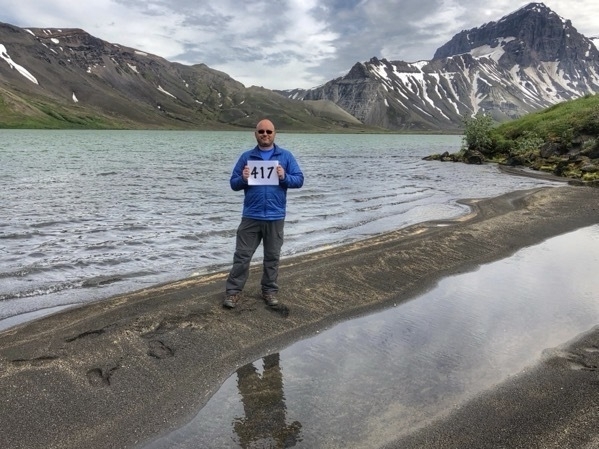
I decided to hold up a sign indicating which park number I was on—a tradition I'd continue at each subsequent park.

Wish I'd started prior to 268! 🤦‍♂️

Image

At this point, my parks quest was something I was going to actually complete! I wasn't sure when that would be, but finishing was no longer a distant "maybe."

But, I got heavily involved in a local backpacking group—and suddenly all my time off went towards that, not new parks.

Image

That was an amazing time for me, and I wouldn't trade those trips or friends for anything. I was also in midst of a big stressful transition in my career that required me to radically cut expenses & forgo a salary for 9 mos.

Which meant an incredible drought for my parks quest.

Image

TWO parks?!! That's it? Just two? Two new parks in two full years?! WTF...

And the start of 2016 wasn't looking any better.

In March I decided to take a bad-for-the-checkbook trip to the Deep South so I could visit at least SOME parks that year. Broke, I slept in my rental car.


Jen and I had been dating for three months now. She posed a question to me: would I go on a surprise trip, where I didn't know the destination? I said sure.

This is a GREAT story, but I'll skip retelling it here. But we ended up in Puerto Rico & USVI, marking off more parks.


And then, we got word that Jen would have a month-long work detail in DC. We hadn't been dating long, so she offered to come back to visit me. But I had a better idea: why don't I go with you instead?

We scheduled a weekend in Boston to do some parks before her detail started...


...with the idea that I'd join her in DC and start looking for a (much needed) new job while there, taking advantage of the free hotel room. When I needed to interview, I'd simply call the trip done and fly home. And we'd do some fun East coast city stuff on weekends until then.


Well, I applied for a job or two—and waited perhaps a day—before bailing to rent a car and do a few days away hitting some parks in western PA 😂🤷‍♂️

I quickly landed an intriguing consulting job (no interview needed) that week, but told them I needed some time before I started.


So, for her entire work detail, I spent the weekends hitting parks with her in Boston, NYC, & Philly—and spending the weekdays camping in a rental car, voraciously visiting parks on my own.

I was planning each day as I went, and started calling it #MyNationalParksMonth.


I did stay in town on her bday week, meeting her at a new brewery after each workday and enjoying the weekend together in Shenandoah & Harpers Ferry.

But for a trip that was originally supposed to be about not being apart too long, that was all we saw of each other. Whoopsie! 🤣


We joke about that now, but Jen was tremendously supportive throughout this epic trip.

As someone with her own big quest, she also understood this unique moment: how often would the stars in my life align like this again?

The opportunity was just too good to pass up. Carpe diem!


Her detail was ending, but...I decided I wasn't done yet. She flew home, and I postponed that new gig even longer so I could stay 3 more weeks to finish all the Eastern parks

It was a terrible financial decision, but a great life decision! A bold move, but one I'm grateful for.


On the flight home, I added up all the new parks. I was at 94 for the year—a year I had originally worried might be zero.

And it was the 100th anniversary of the NPS. I needed to visit only a handful of more parks to have visited 100 parks in 100 days to celebrate 100 years!


And so I made return visits that week to the AZ parks that had helped inspire my quest, completing #100parksin100days!

I was on the home stretch. Sure, I had some REALLY expensive and difficult parks left—but I was now marking the *few* areas of the map I still needed.

Wow!

Image

It was at this point that Jen—who had insisted that she would NOT adopt the quest—decided to count up her own visits. She was at 101.

Ok, well, maaaybe she should at least start keeping track...

Ok, fine, she wants in! But her first quest goal was just reaching 200 total parks.


Part of the reason she adopted it was because we already had a number of other trips planned that year, which often included park units she hadn't been to that I wanted her to see.

"Oh, you haven't been to Arches? Well, let's go there on that long weekend we'll have in October."


So she upped the anty: her goal was now >200 parks, incl everything west of the Mississippi.

We also started sketching out trips to the harder parks: Hawaii, Guam, American Samoa, Alaska. And took trips back to completed areas where a new park unit had just been designated.

Image

With me nearing the finish line, it was clear that she was going to tag along to the most difficult parks to visit. And many other parks would naturally be on our itinerary for other trips.

So, like myself, she eventually expanded the quest to include all of the park units.

Image

A little bit surprisingly, most of our travel now shifted to visiting parks for HER. Sure, we did a trip to Guam, one to WA, and another to FL so I could #Finishthe48.

But for every new park I visited, she marked off at least FOUR. Jen was—very quickly—a highly motivated quester

Image

Completing the Contiguous US seemed like an important milestone, and we expected it to take years and years to finish the remote parks in Alaska & American Samoa, plus any unexpected new ones.

So I had a little celebration with friends, not knowing how many more years I had left


Of course, one sign stuck out... 🤣

Our initial plan was hoping to tackle Alaska in 3 summer trips. If we got lucky on good weather for the required bush flights, we could finish the state in 3 yrs.

We'd need another year for American Samoa, and who-knows-what for any new ones.

Image

We got **very lucky** on our first Alaska trip in 2018, and were able to do ALL of flights into the Western Arctic parks on schedule—which meant we were suddenly half done!

We managed to sneak in an American Samoa trip that winter, putting us waaay over our annual travel budget.


I also did that cannonball run up to Bighorn Canyon to mark off that orphaned unit.

Looking at the map now, I pushed for us to shoot for completing Alaska in just one more trip, not the two we had planned. We'd need more good luck, but it seemed well worth the attempt in my mind


I didn't know, but Jen had already been working with a number of friends (and even my ex-wife Kim!) to surprise me at my last park unit in Alaska. #shesakeeper

The problem was she had given them 3 yrs to plan, not the 2 that I was now pushing. So accelerating it mucked things up


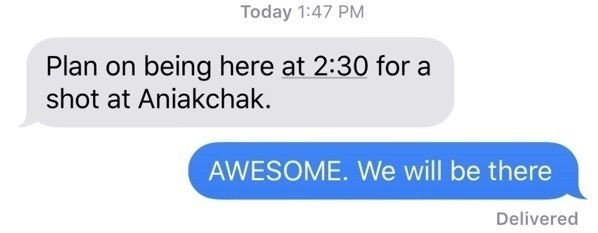
But with Aniakchak—the hardest park unit to visit—still on our itinerary, it might take a third trip. I won't recount the story of how we *finally* made it there, but the short of it is: we did. Barely.

Which meant I'd finish the quest on the trip. Which is *A BIG FUCKING DEAL*


Some friends were able to make the trip anyway and joined me at my last park unit: Glacier Bay National Park. With shirts!

What a journey, right?! It's not every day that you accomplish such a major life goal, one that defined so much of your life.

Holy shit, I ACTUALLY DID IT!


So you'd think I'd be on top of the world. And in many ways, I was!

But it's also weird to "finish" something like this.

It's more interesting to be doing something, than it is to have done something. Being 36% done can be better than 100%. The fun really is in the journey. Huh

Image

That was one of the big lessons for me. And it's why I encourage people to adopt the BIG quest, the one that seems too daunting.

Because it doesn't actually matter if you ever finish or not. The benefits are nearly all in the process of working towards the goal, not finishing it


What do you do when you've finished a big quest like going to all the National Park units?

Well, you start a new quest, of course. And so that's what I did, several times over, many of which I began years before finishing the parks.

Because it's all about the journey.

Image

My parks journey did a few things for me:

  • Helped shape my priorities in life
  • Inspired countless adventures + memories
  • Made me focus on prioritizing experiences over things
  • Provided structure + motivation to see new places
  • Gave me an interesting education on America

Choosing to adopt and pursue this crazy quest has been one of the best decisions of my life, and it's of course been one of the most treasured and impactful endeavors of my life, too.

I'll write more about these things in the future. And maybe add more to this thread later.


If you've somehow made it this far in the thread, you're 100% remarkable. So go adopt a remarkable quest!

Why I'm sticking with Wordpress, at least for now

I love many of the new, simple blogging platforms—Scribbles, Pika, Micro.blog, Bear Blog, omg.lol, and so forth. They're useful for helping you get words on page without much fuss. You don't worry about endlessly tweaking your design, because there really isn't much of one. Like social media, it's more standard interface than personal website. This can be refreshing for those of us who don't enjoy tinkering with code; it lets you focus on what you write, not how everything looks.

But in that simplicity, I'm finding it more difficult to abandon Wordpress for my primary site than I'd like it to be.

That's not because I actually enjoy using Wordpress these days—it's far too complicated than it used to be, at least for me. I don't enjoy the experience there anymore, at all. But it offers some basic features that those simple platforms just...don't (perhaps won't?).

Permalinks

If you already have your own domain name and are moving an existing website from one platform to another, you probably already have a slew of published pages and posts. But many of these platforms don't allow you to choose your own permalink structure, or update an .htaccess file.

So anyone who has gone to the trouble of linking to one of my posts is, well, about to regret having done so, as moving to another platform kills those links. For companies and customers that espouse a return to personal websites and blogging—where we intentionally directly link to others' sites instead of relying on social media algorithms—this feels especially out of tune.

Related to that is maintaining the integrity of the links on one's own site. There seem to be plenty of external services that you can employ to do this, but it seems like it should be a core feature that's omnipresent in all blogging software. After all, if links are the lifeblood of the web, shouldn't they be treated as important enough to keep current by every web publishing platform? At the very least, make this process as integrated and seamless as possible for me, so it's easier to keep up-to-date.

Better menu support

While most of these platforms offer some variety of static pages—ones that live outside of the traditional chronological feed—there isn't much support for websites that have more than a handful of pages, especially when it comes to menus.

There are a host of standard pages (here's another good list of them) that are commonly found on personal websites. If you linked to each of these in your menu, it'd quickly overwhelm any other pages you'd like to highlight. Now, part of the idea of /slash pages is that they're found in standard locations, but who wants to type in every variation hoping to get lucky? Sure, you can create one slashes page and manually link to everything within that one page. But that's a hack workaround that buries the links.

On my website, I have nearly as many static pages as I do topical blog posts. Most of them are not standard slash pages that anyone would guess. I mean, not many other people have a quest to cross every state border combination in the country. Or visit all the sites that were once national parks but have since been abolished or transferred. Or to visit all of the World's Largest Balls of Twine (yes, there's four different ones that all claim the title)(And yes, I can go on and on about my various quests—don't tempt me).

For me, these are all pages instead of posts because they're more a permanent reference than a timely update. They shouldn't be associated with a particular date, even if more detailed updates should be. For instance, Ideally I'd have one page for each of my ongoing travel quests, with occasional blog posts detailing when I've marked off another objective that are then referenced in the main page. At least, that's what makes sense to me.

Unfortunately, simple menus just don't allow for me to highlight all of the pages I have—pages that I always want to remain easily accessible no matter where on the site you are.

Photo galleries

One of the things I'd like to get back to on my website is posting more about our various travels, including posting a number of pictures from each trip. For the last decade or more, most of these ended up on social media platforms instead, which is a real shame. They should live on my personal website, after all.

But nearly all of the simple blogging platforms make posting a series of photos less-than-ideal. Sure, they render fine, but are mostly just a bunch of full-width images that require a lot of scrolling to get through. This doesn't work very well for travel-related posts, as my visitors are pretty divided on whether they're there primarily to see photos or there to read about the trip. 

While it requires a bit more coding complication, I like having things like a customized tiled gallery, or a carousel, or a slider of some sort for various photo-heavy blog posts. Hell, for a long time, it was a leading factor in which Wordpress theme I chose.

Where does that leave me?

Oh hell if I know! 🤷‍♂️ 

The most likely scenario here is that I first attempt a redesign of my Wordpress site (which sounds awful), while also micro-blogging on one of these other services—always using a custom domain that I can later redirect if I move those posts elsewhere. And if that solution doesn't seem to work well, then perhaps the endeavor provides me with a bit more clarity on how to proceed.

[29/31] for #WeblogPoMo2024
[31/100] for #100DaystoOffload

Originally posted on scribbles.rscottjones.com

I use RSS as a buffet, not a task list

I ran across this (very well done) post on hating RSS feeds yesterday.

It’s really well done and I appreciate the underlying notion: rss feeds can feel like “work” to be done.

But I’ve always viewed them as a buffet from which I can sample. Not as a task list. A place to graze.

I have absolutely no desire to consume everything on the buffet. Yes, I have some things I’ll eat nearly every time. But in general, it’s a broad selection from which I can sample, depending on my mood. I have no obligation to eat it all, and in fact, that might be considered unreasonable.

The stuff I always put on my plate first is in one folder. The stuff I don’t eat that regularly goes into another folder, from which I only occasionally peak. I even have feeds from my friends' blogs that I never read, as they’re not on topics I care about, or are a bit too influencer-y for my tastes. But I’ll occasionally pop in to mark those as read, giving me a second or two to scan for a (rare) life update or something surprisingly interesting.

There’s simply too much to consume in the modern era to ever consider some grouping of content as a task list. If your default is to view that as such, I think you’re going to feel especially overwhelmed in the modern world.

I’m considering signing up for omg.lol almost entirely for the damn statuslog…

Are there any similar solutions I could use to quickly plant a status on my various sites? 🤔

Reposts from my Hey World blog

I reposted several posts from Hey World to my personal website.

Day 27: Surprise for challenges.micro.blog

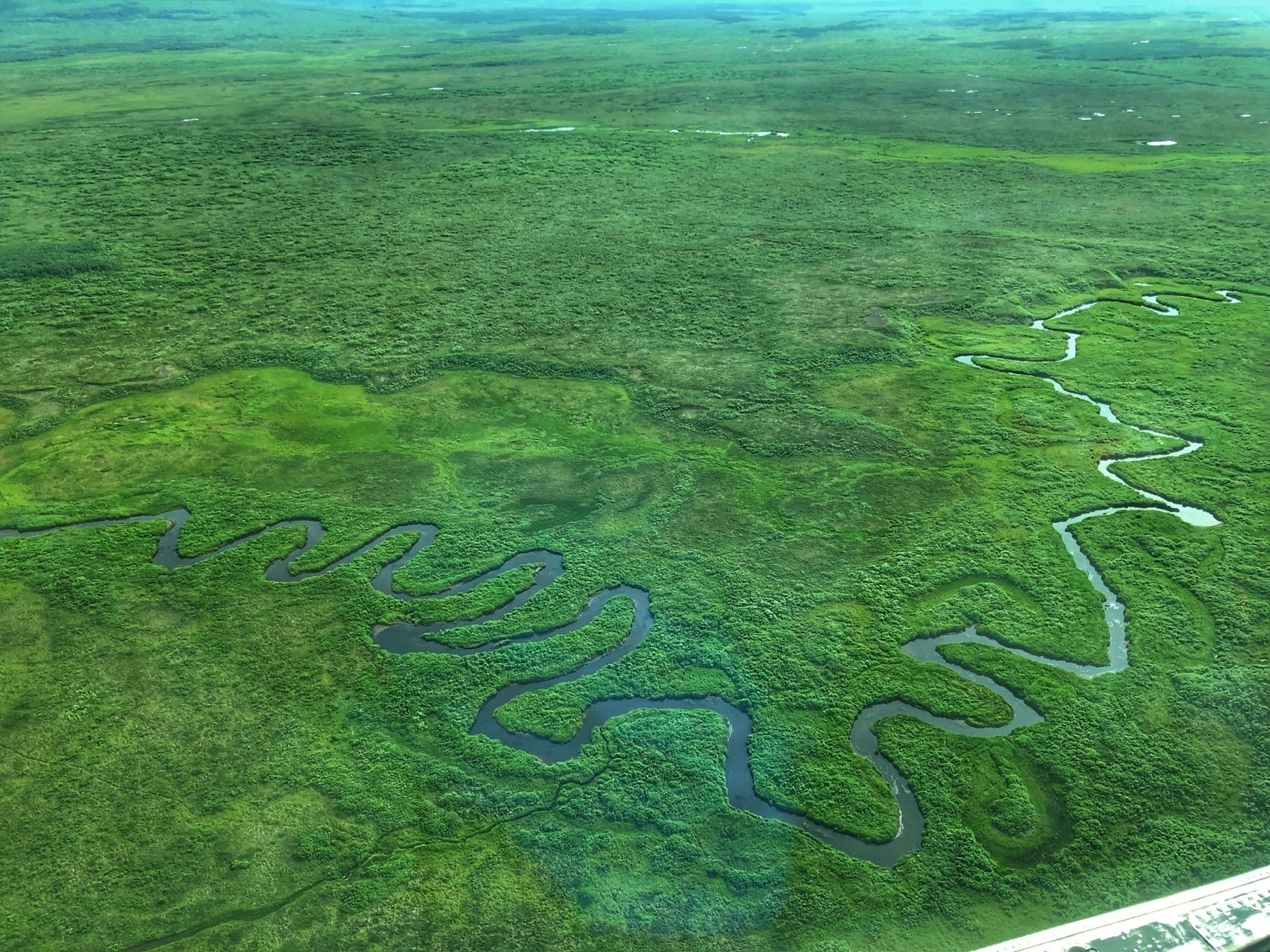
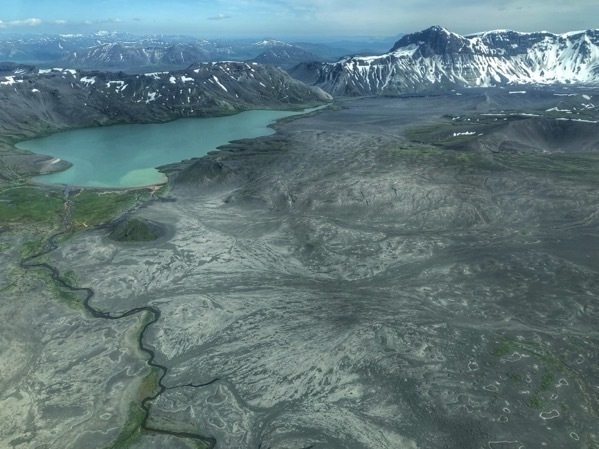
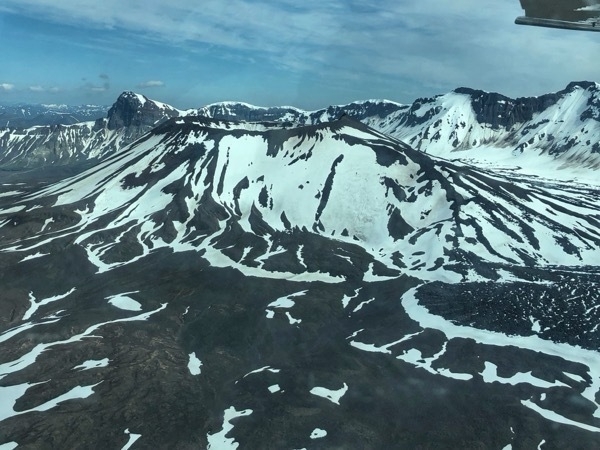
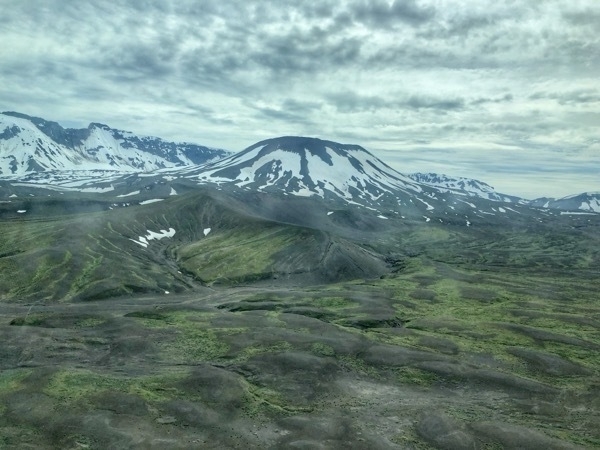
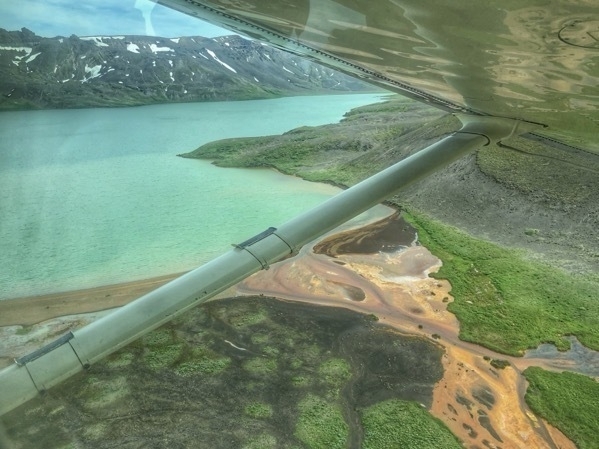
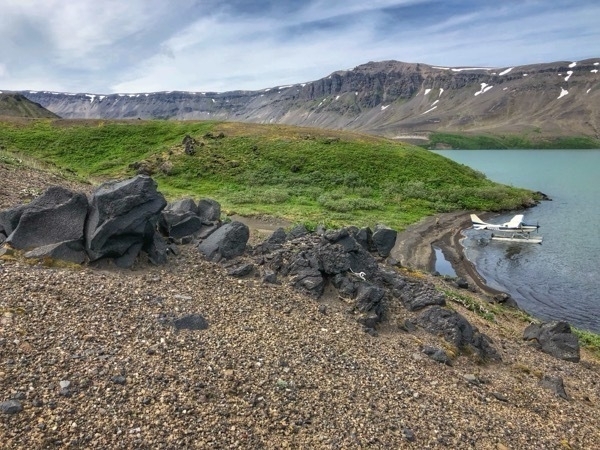
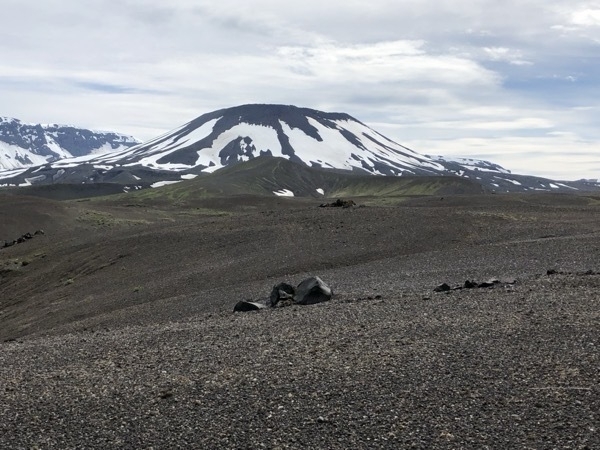
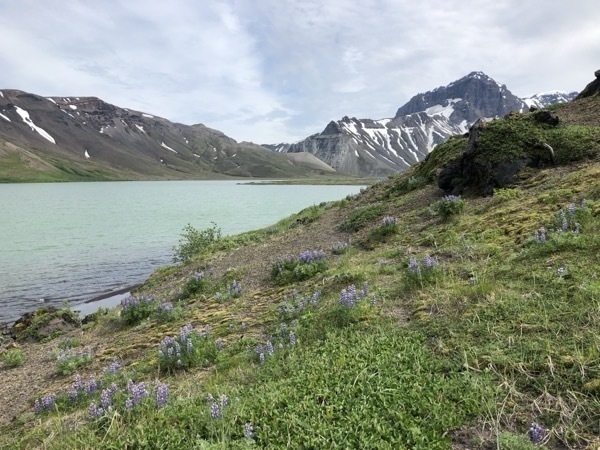
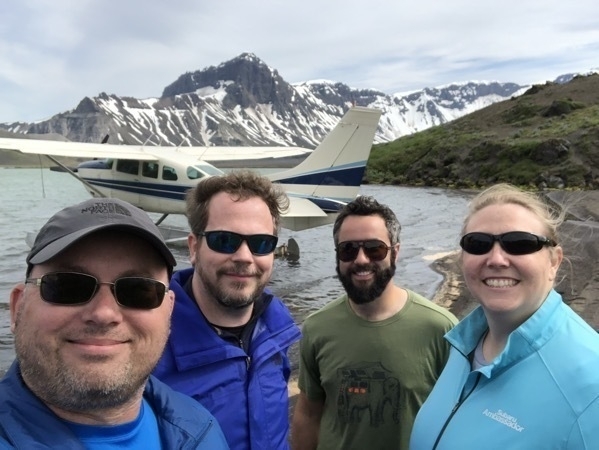
This is Surprise Lake in Aniakchak National Monument, a collapsed caldera in remote Alaska that’s the least visited park unit in the country. I spent 5 days waiting for a short window to fly here via bush plane in 2019, so it’s a surprise that you made it!

Day 21 Mountains for challenges.micro.blog: “The Great One”

Denali in the distance, with a canoe on a lake in the foreground

Day 18: Mood for challenges.micro.blog

Four individuals in kayaks on the Colorado River; three are napping, one is reading a book.

Day 17: Transcendence for challenge.micro.blog.

This is the spot where the mutilated body of a young black boy, Emmett Till—whose crime was being black in rural Mississippi during Jim Crow—was dumped, an event that transcended a “simple” race murder and helped to launch the Civil Rights Movement.

A dilapidated rusted bridge over a flooded bayou, with trees flooded along the banks and muddy water in the channel.

I’m considering abandoning my general Mastodon account (I have another one that solely dedicated to travel/outdoor adventures) and moving everything to Micro.blog, where I’d also pull in my other fedi-posts and my blog posts from my primary website.

What drawbacks will I encounter?